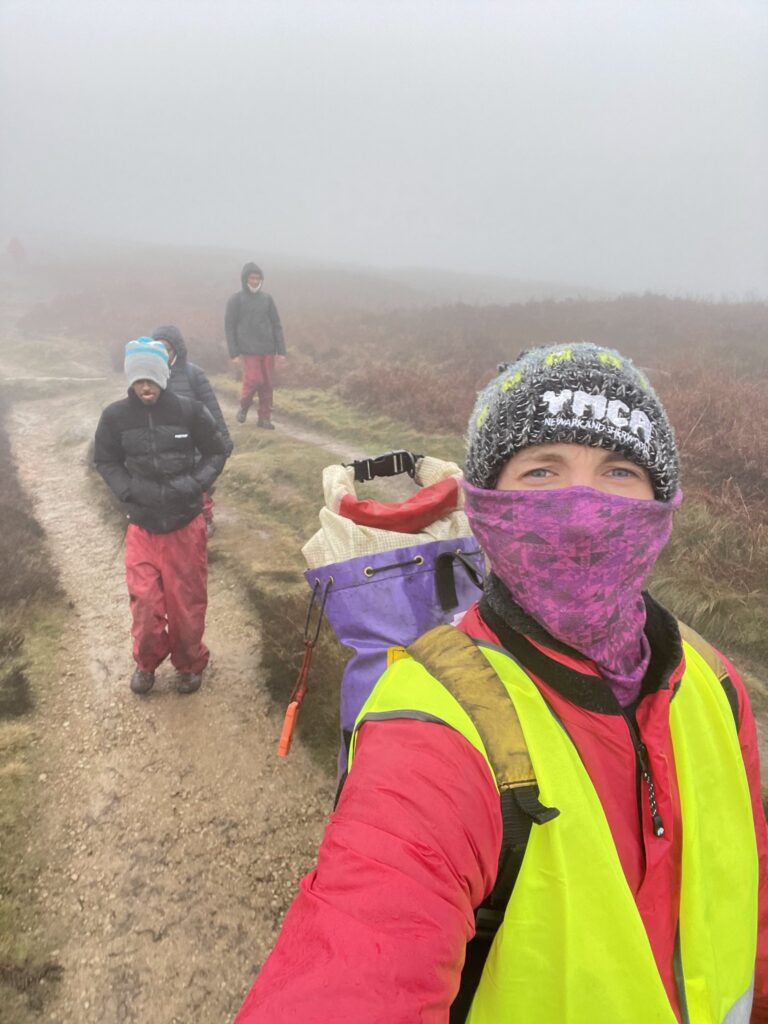
As part of the Outdoor Environmental Bloggers programme, a group of unaccompanied asylum-seeking young people (UASC) were referred to the programme through Nottinghamshire County Council. Many of the young people had arrived in the UK recently and were adjusting to a new culture, language and environment.
For many of them, the programme represented their first opportunity to explore the British countryside and take part in outdoor education activities. Communication was initially challenging, as English was not their first language, however staff used tools such as Google Translate alongside gestures and visual demonstrations to support understanding and inclusion.
The programme aimed not only to introduce the young people to outdoor activities but also to develop their understanding of environmental stewardship and conservation in the UK.
First Outdoor Experience – Higger Tor
One of the group’s early sessions involved a walk around Higger Tor. The conditions on the day were challenging, with cold temperatures, heavy fog and rain. Despite this, the group showed enthusiasm and curiosity about their surroundings.
During the walk, staff used Google Translate to ask the young people questions about the environment around them. One discussion focused on the types of wildlife they might expect to see in the area. Some of the young people suggested animals such as lions, which highlighted how different their previous experiences of nature had been compared to the UK countryside.
This created an opportunity for a meaningful conversation about local ecosystems in the UK, including the types of plants and animals that are native to the Peak District.
This is what Alex, our Outdoor Education Leader thought of the day:
“As we headed into Higger Tor, we were surrounded by thick fog. For Jack and I, who know the area like the back of our hands, it still felt ominous as we stepped into something that felt slightly otherworldly. I found myself wondering what the young people were thinking, especially as the language barrier meant we couldn’t have a full conversation with them.”
They happily followed the leader as they walked, but what really stood out was how, at every photo opportunity, they wanted to stop, pose, and take pictures. To me, that was a clear sign they were enjoying the experience and wanted to share what they’d done that day with others.
Learning About Environmental Responsibility
During the walk, staff also noticed that some litter had been dropped along the route by members of the group. Through conversation, it became clear that this behaviour was not intended as disrespect. Instead, it reflected what some of the young people described as normal practice in the environments they had grown up in.
This provided a valuable teaching moment. Using translation tools and discussion, staff explained the expectations around environmental care in England and the impact that litter can have on wildlife and natural spaces.
The young people responded extremely positively. They listened respectfully, asked questions and showed a clear willingness to understand and adapt to these expectations. Several participants helped collect litter during the walk once they understood the impact it could have.
Building Understanding and Confidence
Although the session took place in difficult weather conditions and required overcoming language barriers, it became an important moment of learning for the group.
The young people demonstrated curiosity about their new environment and showed respect for the information being shared with them. By the end of the session, they had gained a better understanding of local wildlife, conservation and the importance of protecting natural spaces.
The activity also helped build trust between the young people and staff, creating a supportive environment where questions could be asked openly and learning could take place in a relaxed and engaging way.
Early Outcomes
This first experience outdoors helped establish several important foundations for the group:
- Increased understanding of the UK’s natural environment
- Greater awareness of environmental responsibility and conservation
- Improved communication and confidence despite language barriers
- Positive engagement with outdoor learning activities
The session marked the beginning of the group’s journey through the Outdoor Environmental Bloggers programme, where they would continue to explore nature, take part in environmental challenges and document their experiences through photography and blogging.